






How Technology Is Reshaping K-12 Education in India Beyond Traditional Classrooms
Key Takeaways Introduction Education in India has long existed in traditional, physical classrooms by way of textbooks and teacher-led instruction. These methods still play an important role in...

Key Takeaways
- Technology is transforming K-12 education beyond traditional classroom boundaries.
- Personalized learning platforms help students learn at their own pace.
- Online and virtual schools are improving access to quality education across India.
- Artificial intelligence is enhancing student assessment and learning outcomes.
- Digital literacy is becoming an essential life skill for future careers.
- Emerging technologies such as virtual reality and augmented reality are creating immersive learning experiences.
- Technology adoption in K-12 education is influencing future academic pathways, including higher and professional education.
Introduction
Education in India has long existed in traditional, physical classrooms by way of textbooks and teacher-led instruction. These methods still play an important role in education today; however, the explosion of digital technologies is changing the way we teach and learn. Today’s learners are not restricted to the confines of a classroom. They can access educational content anywhere and collaborate with peers virtually, while receiving personalized assistance through intelligent learning systems.
Table Of Content
- Key Takeaways
- Introduction
- The Rise of Personalized Learning
- Online Education Is Expanding Learning Opportunities
- Artificial Intelligence Is Changing the Learning Experience
- Smart Classrooms Are Making Learning More Interactive
- Building Essential Digital Literacy Skills
- Virtual Reality and Augmented Reality in Education
- Data-Driven Learning and Academic Improvement
- Preparing Students for the Future Workforce
- Challenges in Technology Adoption
- Limited Access to Digital Infrastructure
- Teacher Training Requirements
- Data Privacy Concerns
- Balancing Screen Time
- The Future of K-12 Education in India
- Conclusion
- Frequently Asked Questions (FAQs)
- 1. How is technology improving K-12 education in India?
- 2. What are the benefits of online schooling?
- 3. How does artificial intelligence support student learning?
- 4. Why is digital literacy important for students?
- 5. What role do virtual schools play in modern education?
- 6. What challenges does technology-based education face in India?
The transformation is especially visible in K-12 education, where schools are increasingly adopting digital tools to improve engagement and learning outcomes. The growing popularity of the online school in India model reflects this shift, providing students with greater flexibility while maintaining academic quality. This trend is also laying the groundwork for future academic success. Similar developments can be observed in the Higher Education Market (Mercado de Educación Superior), where institutions are integrating technology-driven learning models to meet the evolving needs of modern students.
As technology grows more widely available, Indian schools have begun to look into new methods of establishing flexible, inclusive, and student-centered learning environments. Platforms such as Cyboard School demonstrate how digital education can extend learning opportunities beyond traditional classrooms by combining structured curricula with interactive and technology-enabled learning experiences. As a result, education today encompasses a variety of learning spaces that go far beyond the conventional classroom.
The Rise of Personalized Learning
Every individual learns differently, with some being more adept at grasping concepts faster than others. Unfortunately, traditional educational settings have difficulty accommodating this difference because teachers are managing many more students at the same time than they can devote attention to each student individually.
Technology is helping to provide personalized learning systems that include features that will allow teachers to determine students’ performance and modify their lessons to fit a student’s individual strengths and weaknesses. Rather than all students progressing through a lesson at the same rate, students will progress through each lesson at the rate that works best for them and their learning preferences.
In addition to academic improvement, personalized learning creates higher confidence in students as well as higher motivation levels. Students are getting exactly what they need where needed in terms of content support; hence, they will be able to develop a more solid foundation for studying in key subject areas.
Online Education Is Expanding Learning Opportunities
There has been incredible growth in the field of online education; giving students around the globe an opportunity to get some level of instructional quality from teachers throughout the world, similar to those that would be available to other children living remotely or in isolation. Prior to the introduction of the internet, students who lived in rural areas were at a disadvantage as they did not have access to instructors with a high level of expertise or high-quality instructional resources e.g., electronic resources and hands-on experiences without having to leave their geographical communities to get access to these resources.
In addition to offering increased access to instructional resources, the increase in the number of online schools (offering CBSE curriculum) indicates that technology has provided families with greater flexibility in their pursuit of alternative educational opportunities. These online schools provide students with a way to continue their academic studies in a non-traditional manner by providing them access to lessons or resources from virtually anywhere, at any time.
Another key contributor to the expansion of the virtual school system in India is Cyboard School’s combination of a formal curriculum and new age digital learning technologies. The new virtual schools are intended to facilitate student-learning by allowing students to pursue academic achievement through various methods based on their unique situations and preferences.
Artificial Intelligence Is Changing the Learning Experience
Modern education increasingly relies on artificial intelligence (AI). AI applications can review students’ learning behaviours to predict areas for improvement by giving them access to much better targeted resources.
Students benefit from this type of assistance by providing them with much greater levels of academic support.
Teachers also benefit from some of their jobs being removed from them (e.g. automated marking of assessments and tracking the performance history of their students) through the use of an AI based solution.
Additionally, tech-based education helps prepare students for future educational paradigms. Examples demonstrate how rapidly this paradigm shift is occurring in the professional level education Medical Education Market through many forms, including using digital simulations, using virtual labs, and using AI-based training to prepare future professionals for the workforce.
When K-12 students are exposed to technology, they can adjust to using more technology based systems when they continue their education.
Smart Classrooms Are Making Learning More Interactive
Teachers are transforming their classrooms from being passive spaces of learning to more exciting and interactive places to learn. With the help of smart boards, multimedia presentations, educational apps, and online collaboration platforms, teachers can provide ways to present new information in an engaging manner.
Through the use of interactive learning, students can better visualize and understand challenging concepts that may otherwise be hard to comprehend. For example: science experiments can be digitally simulated; historical events can be explored through various types of media; mathematical concepts can be visualized using real-time interactive media.
By providing these types of opportunities, teachers create a more enjoyable experience for their students while continuing to foster active participation in the classroom.
Building Essential Digital Literacy Skills
In today’s digital world, students need more than academic knowledge. They also need to learn how to navigate digital platforms, assess information online, communicate effectively, and use technology responsibly.
Digital literacy is an essential skill for higher education and future employment. Technology-enabled learning gives students hands-on experience with tools that are becoming increasingly common in universities and workplaces.
With digital transformation taking place across all industries, students who learn these skills early on will be more likely to have greater opportunities in the future.
Virtual Reality and Augmented Reality in Education
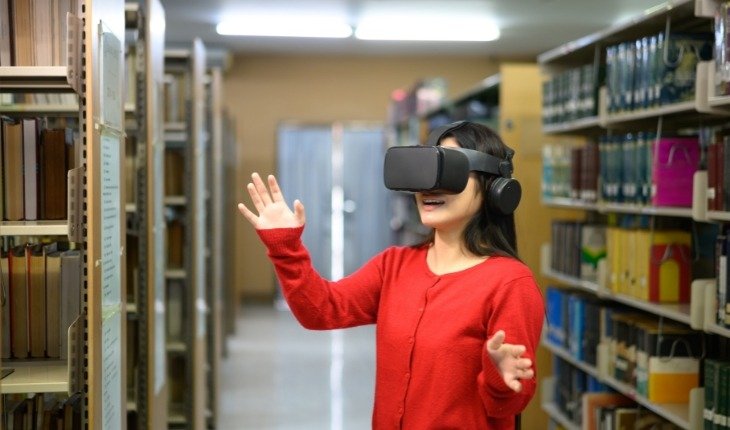
Experiential Learning is being transformed through new ways of learning using VR (Virtual Reality) and AR (Augmented Reality). VR and AR create an opportunity for students to experience engaging interactions with curricula and materials in a manner that traditional printed textbooks do not provide. As digital learning continues to evolve, many institutions within the growing virtual school in India ecosystem are exploring VR and AR to create more engaging and immersive classroom experiences.
For example, a student studying human anatomy can digitally examine a full-scale 3D rendering of the human body. Virtual field trips to ancient civilizations can be created within History courses, while Geographic courses can provide interactive experiences exploring popular global landmarks and ecosystems.
Creating realistic and immersive experiences will improve students’ comprehension and retention of knowledge.
Data-Driven Learning and Academic Improvement
Educational institutions are increasingly using data to improve learner outcomes. Learning Management Systems (LMSs) enable educators to collect, track and analyze student attendance, participation, assessment scores and learning progress in real time. This gives teachers the opportunity to identify students who may need assistance and provide appropriate help quickly. Schools can also look at trends in the data to see how well curriculum and instructional strategies are working. This data-driven approach enables more informed decision making and supports academic improvement in progress.
Preparing Students for the Future Workforce
To be successful in a job market that is becoming more reliant on technology, we need to develop both skills related to work (technical skill) as well as non-work-related (soft skills). An increasing number of employers want people who can think critically about problems and find creative solutions to them, have the ability to work well with others and effectively use today’s technology.
Students will have opportunities to gain these skills through participatory learning methods, such as project-based learning and coding classes, as well as through other educational activities that help them learn how to solve problems.
Schools today must prepare students for jobs that will likely not be available for many years due to advances in automation and AI. We will continue to help students gain the skills necessary to be successful in their communities and wherever they go into the world through technology.
Challenges in Technology Adoption
While technology offers significant benefits, several challenges remain.
Limited Access to Digital Infrastructure
Not all students have access to reliable internet connections or digital devices. Addressing this digital divide remains essential for ensuring equal educational opportunities.
Teacher Training Requirements
Technology is most effective when educators know how to use it effectively. Continuous professional development is necessary to help teachers integrate digital tools into their instructional practices.
Data Privacy Concerns
As schools collect increasing amounts of student data, protecting privacy and maintaining cybersecurity standards become critical priorities.
Balancing Screen Time
Technology should complement learning rather than dominate it. Maintaining a healthy balance between digital and offline activities is important for student well-being.
The Future of K-12 Education in India
In all likelihood, education will not be primarily based on either traditional methods or entirely digital means in the future; however, schools will use blended learning models (which incorporate both face-to-face instruction and technology-assisted learning) more and more often as new advances in technologies continue to emerge.
Examples of the types of technologies that will have an effect on the way students learn and use educational material are: Artificial Intelligence, Adaptive Learning Systems, Virtual Reality, and Cloud Computing solutions. Schools that apply these advances successfully while still maintaining good teaching practices will be in the best position to meet the needs of their future students.
Conclusion
“Technology is redefining the way K-12 education is unfolding in India beyond the boundaries of classrooms. Digital innovation is offering students across the country new opportunities from personalized learning and artificial intelligence to virtual schools and immersive educational experiences.
The challenges of infrastructure, accessibility and training aside, the long-term potential of educational technology is undeniable. When responsible innovation is embraced, educators and institutions can foster more inclusive, engaging and future-ready learning environments that empower students to thrive in an increasingly digital world.
Frequently Asked Questions (FAQs)
1. How is technology improving K-12 education in India?
Technology improves K-12 education by enabling personalized learning, increasing access to educational resources, enhancing classroom engagement, and supporting flexible learning models.
2. What are the benefits of online schooling?
Online schooling provides flexibility, accessibility, personalized learning opportunities, and access to quality education regardless of geographical location.
3. How does artificial intelligence support student learning?
AI helps identify learning gaps, recommend personalized study materials, automate assessments, and provide data-driven insights that support student success.
4. Why is digital literacy important for students?
Digital literacy helps students develop essential skills needed for higher education, future careers, responsible technology use, and effective online communication.
5. What role do virtual schools play in modern education?
Virtual schools expand access to quality education, provide flexible learning options, and enable students to continue learning regardless of location or circumstances.
6. What challenges does technology-based education face in India?
Key challenges include unequal internet access, limited digital infrastructure, teacher training needs, cybersecurity concerns, and managing student screen time effectively.
Author Bio:
Mateo Carlos is a market research professional and content contributor specializing in education, technology, healthcare, and emerging industry trends. He regularly analyzes global markets and digital transformation developments, helping readers understand how innovation is reshaping industries and everyday life. Through data-driven insights and research-backed content, he explores topics that influence businesses, consumers, and future growth opportunities.






No Comment! Be the first one.