







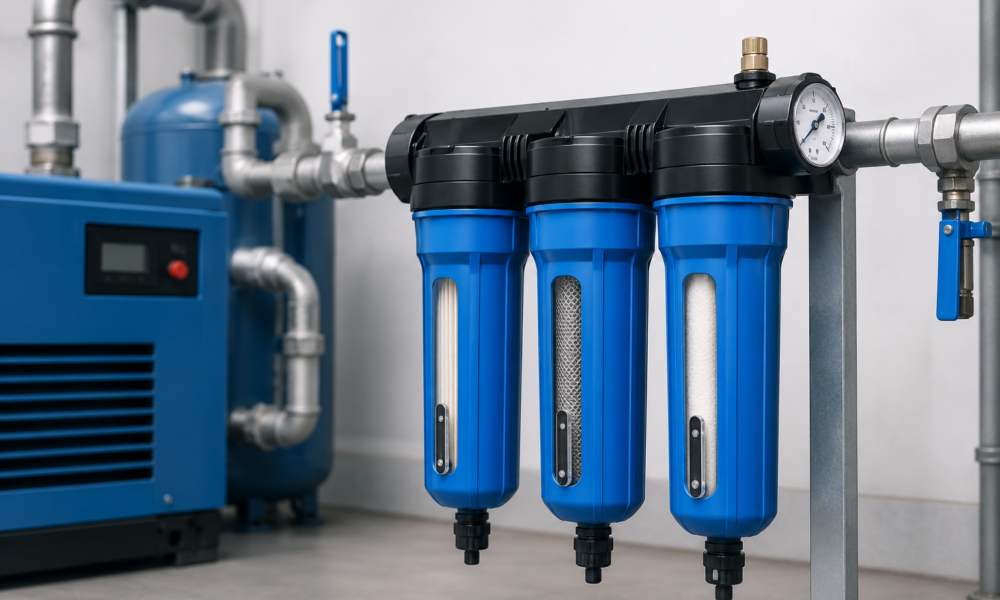
In today’s industrial environment, compressed air plays a vital role in powering machinery, automation systems, pneumatic tools, and manufacturing processes. But the quality of compressed air has a direct effect on the efficiency of the equipment, product quality and operational cost. This is where a compressed air filter becomes crucial to any compressed air system.
Table Of Content
- Understand about What is a Compressed Air Filter?
- Discuss Why is it important to have a Compressed Air Filter?
- There are various Types of Compressed Air Filter
- Understand about Common Compressed Air Filters Applications
- Here are signs that your compressed air filter needs to be replaced
- How to Choose the Right Compressed Air Filter
- Here are some tips for long-term performance
- The advantages of investing in a high quality Compressed Air Filter includes
- Conclusion
Pollutants like dust, oil aerosols, water droplets and pollutants in the form of small particles are filtered out of the compressed air, prior to their reaching sensitive equipment. Not only will investing in the right filtration solution increase the reliability of the system, it will also help to increase the service life of compressors and equipment downstream.
Understand about What is a Compressed Air Filter?
Compressed air filters are filters that are used to remove unwanted contaminants from compressed air. Air always holds dust, water vapor, oil residue, rust particles and other impurities during the compression process. If these contaminants are not properly filtered they can cause damage to the pneumatic equipment, clog valves and cause loss in production efficiency.
Depending upon required air purity levels, compressed air filters are used in different areas of the air distribution system. Clean compressed air is essential to the manufacturing processes of industries like pharmaceuticals, food processing, automotive manufacturing, electronics and healthcare and for product quality, regulatory compliance, among other reasons.
Discuss Why is it important to have a Compressed Air Filter?
Compressed air is at the present time also viewed as the “fourth utility” in industrial processes. Air that is contaminated may make operating the facility difficult, however.
Compressed air filters can offer significant advantages, such as:
- Cleans up dust, dirt and solid particles
- Removes oil aerosols and oil vapours
- Dries out wet and damp areas
- Shields pneumatic tools and machines
- Improves production efficiency
- Can prolong the life of the equipment
- Reduces maintenance costs
- Aid in quality control of product
downtime if it installs the appropriate compressed air filtering system.
There are various Types of Compressed Air Filter
The level of air cleanliness varies from one industrial use to another. The selection of the right compressed air filter is dependent on the contaminants to be filtered out.
1. Particulate Filters
Particulate filters are used to remove solid contaminants, like dust, rust, dirt and pipe scale. These are typically used as initial filters.
2. Coalescing Filters
Coalescing filters that collect small oil aerosols and water droplets. The filters themselves consist of minute liquid particles which aggregate into larger particles that can be easily drained from the system.
3. Activated Carbon Filters
Oil vapors, odors and hydrocarbon contaminants are removed by an activated carbon filter. The filters are popular in applications requiring high quality air, such as food, drink and pharmaceutical manufacturing.
4. High-Efficiency Filters
High-efficiency filters deliver high quality of air filtering in applications needing maximum air purity. They filter out small particles which cannot be filtered out by normal filters.
Understand about Common Compressed Air Filters Applications
Compressed air filters are applied to many industries. Compressed air is of critical value for them.
These are some of the commonly used applications:
Manufacturing plants
Automotive assembly lines
Food and beverage processing
Pharmaceutical production
Chemical industries
Textile manufacturing
Electronics manufacturing
Medical and laboratory equipment.
Packaging industries
CNC machining operations
However, since each industry is specific regarding its air pollutant requirements, choosing the right filter is a crucial component of the system design.
Here are signs that your compressed air filter needs to be replaced
Compressed air filters also have a useful life.As with any filter, a compressed air filter comes with a limited service lifespan. Eventually contaminants begin to collect inside the filter element, which decreases the flow of air and the performance of the filters.
Keep an eye out for these common warning signs:
- Increased pressure drop
- Reduced airflow
- Poor equipment performance
- Water in air lines.
- Oil contamination
- Higher energy consumption
- Frequent maintenance issues
Regularly changing the filters = optimized system performance + avoid costly repairs.
How to Choose the Right Compressed Air Filter
When choosing the perfect compressed air filter, it’s essential to consider a number of key factors.
Before buying check out the following:
- The required level of air cleanliness.
- Operating pressure
- Air flow capacity
- What kind of contaminants are found in the soil?
- Temperature conditions
- Industry-specific standards
- Maintenance requirements
- Total operating costs
Having an experienced filtration manufacturer can make sure that the filter fits with your compressed air system and application.
Here are some tips for long-term performance
A compressed air filter must be routinely maintained to ensure it continues to function at maximum efficiency.
The most desirable maintenance approaches are:
- Inspect filters regularly.
- Change filter elements as per the manufacturer’s specification.
- Drain accumulated condensate.
- Monitor differential pressure.
- Look for Air leakage.
- While washing the filters, clean the filter housing.
- Record maintenance for scheduled replacement.
The compressor loads may be lower and the overall energy efficiency can be better if correct compressor maintenance is performed.
The advantages of investing in a high quality Compressed Air Filter includes
The role of a compressed air filter may be something minor but its influence on the compressed air system is huge.
A high-quality filter system offers:
- Better air quality
- Lower maintenance expenses
- Increased compressor efficiency
- Reduced downtime
- Longer equipment lifespan
- Improved workplace productivity
- Lower energy consumption
- Consistent manufacturing quality
High quality water filtering systems are a worthwhile business investment and can save money in the long term.
Conclusion
A compressed air filter stands out as one of the most critical elements in a compressed air system. It filters out dust, oil, moisture and small particles, which not only helps to maintain a clean and reliable supply of compressed air for industrial processes, but also helps to prevent the contamination of any valuable equipment.
Whether you run a manufacturing site, food processing plant, car repair shop or pharmaceutical manufacturing line, the right compressed air filter system and proper maintenance will lead to improved efficiency, lower operating costs and overall productivity. Making an investment in compressed air filters, that are efficient and reliable, is a forward thinking measure that assures consistent performance and longer operating life.







No Comment! Be the first one.