






Why Kuppam Green Granite Shows Natural Linear Movement
Some natural stones are admired because of bold colors. Others become popular because of dramatic veins. Kuppam Green Granite earns its place for a different reason. Its naturally flowing linear...

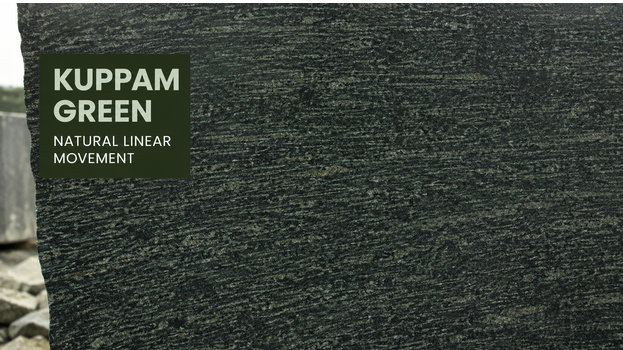
Some natural stones are admired because of bold colors. Others become popular because of dramatic veins. Kuppam Green Granite earns its place for a different reason. Its naturally flowing linear movement creates a sense of direction that very few granites can match. Instead of looking busy or random, the surface carries long mineral bands that seem to travel across the slab in a calm and organized way. That unique appearance is one of the biggest reasons architects, designers, and international buyers continue choosing it for residential and commercial projects.
Table Of Content
- Understanding What Linear Movement Means
- Geological Forces Created These Patterns
- Mineral Composition Plays a Major Role
- Quarry Orientation Influences the Final Slab
- Why Designers Appreciate Linear Movement
- Large Flooring Projects Benefit the Most
- Countertops Show a Different Character
- Wall Cladding Creates Vertical Flow
- Why Block Selection Matters
- Slab Matching Improves Final Results
- Lighting Makes the Movement More Visible
- Common Misunderstandings
- Choosing the Right Supplier
- Final Thoughts
Many people notice these long lines but very few understand why they exist. They are not created during polishing or cutting. They are not printed or artificially enhanced. They are the result of geological processes that happened deep beneath the earth millions of years ago.
If you are planning to source kuppam green granite slabs for a project or simply want to understand what makes this stone different, learning about its natural linear movement will help you appreciate why it has become one of the most recognized Indian granites in the global market.
Understanding What Linear Movement Means
When people describe Kuppam Green Granite, they often mention its flowing lines. In natural stone terminology, this is called linear movement. It refers to the direction in which minerals appear to travel across the slab.
Unlike spotted granites where mineral crystals are scattered in every direction, Kuppam Green Granite develops elongated mineral bands that follow a noticeable path.
This movement gives the surface several visual advantages.
It creates a feeling of continuity.
It makes large spaces appear more connected.
It allows designers to guide the eye naturally through a room.
It produces a modern appearance while still preserving the beauty of natural stone.
That combination makes the granite suitable for projects where visual flow is just as important as durability.
Geological Forces Created These Patterns
The linear movement begins long before quarrying. It starts during the formation of the granite itself.
Deep beneath the earth, molten rock slowly cooled while enormous pressure acted on the surrounding minerals. Unlike rapid cooling that produces random crystal arrangements, this slow geological activity allows minerals to align gradually.
Over millions of years those aligned minerals became locked into the rock.
When quarry workers later extract granite rough blocks, those internal mineral directions remain preserved inside the stone.
After cutting, the slabs reveal the flowing structure that nature created long before humans ever saw it.
This is why no artificial material can truly copy the appearance of genuine Kuppam Green Granite.
Mineral Composition Plays a Major Role
The beautiful linear appearance is also influenced by the minerals inside the stone.
Kuppam Green Granite contains feldspar, quartz, biotite, and other dark minerals. During formation these minerals did not settle randomly. Instead they followed pressure driven alignment that created long streaks across the granite.
Quartz adds subtle brightness.
Dark minerals increase contrast.
Green feldspar contributes to the distinctive green gray background.
Together these minerals create movement without making the surface feel crowded.
That balanced appearance is one reason many designers prefer this granite over heavily patterned alternatives.
Quarry Orientation Influences the Final Slab
Not every slab displays the same movement. The direction in which the quarry cuts granite rough blocks affects how those internal mineral lines become visible.
Imagine slicing through a loaf of bread.
Depending on the cutting angle, every slice looks slightly different.
Granite behaves much the same way.
If blocks are cut following the natural mineral direction, the slabs show long elegant lines.
If cut at another angle, the movement may appear shorter or more irregular.
An experienced Indian granite slab exporter understands this relationship and plans cutting methods according to customer requirements.
This is especially important for projects where pattern continuity matters.
Why Designers Appreciate Linear Movement
Designers often avoid surfaces that appear visually chaotic.
Linear movement solves that problem.
Instead of competing with furniture, lighting, or architectural elements, Kuppam Green Granite supports the overall design.
Long mineral lines naturally guide the eye across the room.
This creates a calm atmosphere without making the surface boring.
In large commercial spaces this visual flow becomes even more valuable because it helps unify wide floor areas.
The granite adds personality without overwhelming the architecture.
Large Flooring Projects Benefit the Most
One place where linear movement becomes especially impressive is large flooring installations.
When kuppam green granite slabs are installed with proper pattern planning, the mineral lines continue from slab to slab.
This creates an almost uninterrupted visual rhythm.
Hotel lobbies often use this effect.
Corporate entrances benefit from it as well.
Luxury residences also achieve a spacious feeling because the flooring appears connected instead of divided.
Of course this only works when slabs are selected carefully from matching production lots.
Countertops Show a Different Character
Kitchen countertops reveal another side of the stone.
Because countertop dimensions are smaller than large floors, the flowing movement becomes more concentrated.
Instead of stretching across an entire room, the mineral bands highlight the work surface itself.
Many homeowners appreciate this because the countertop becomes interesting without becoming distracting.
The movement adds depth while keeping the overall appearance refined.
Wall Cladding Creates Vertical Flow
Vertical installations change how people experience the stone.
When slabs are installed correctly on walls, the mineral lines naturally guide the eye upward.
This creates the impression of taller spaces.
Reception areas, hotel walls, and luxury bathrooms often use this technique.
Proper slab sequencing becomes very important here.
A professional Indian granite slab exporter normally labels slabs in sequence so installers can preserve the natural flow during installation.
Why Block Selection Matters
Every successful project starts with careful block selection.
Not every quarry block produces identical results.
Some granite rough blocks display stronger movement.
Others have softer patterns.
Experienced suppliers inspect each block before cutting.
They separate blocks based on
Color consistency
Pattern direction
Mineral balance
Structural quality
This process helps buyers receive shipments with predictable appearance.
Without block selection, large projects can quickly lose visual consistency.
Slab Matching Improves Final Results
Once blocks are processed, slabs should never be mixed randomly.
Matching slabs from the same production sequence allows the natural movement to continue across the installation.
This is particularly important for
Large flooring
Feature walls
Commercial buildings
Hotel projects
High end residences
Buyers ordering kuppam green granite slabs should always request sequential slab photographs before shipment.
This simple step helps avoid surprises later.
Lighting Makes the Movement More Visible
Natural light reveals the linear structure beautifully.
Morning sunlight often highlights the softer green background.
Afternoon light increases contrast between the darker mineral bands.
Even indoor lighting changes how the movement appears throughout the day.
This changing visual character gives the stone life.
Unlike printed surfaces that remain flat, natural granite interacts with light in subtle ways.
That is one reason architects continue choosing genuine natural stone.
Common Misunderstandings
Some buyers assume stronger movement means lower quality.
Actually the opposite is often true.
Natural linear movement is one of the defining characteristics of Kuppam Green Granite.
Another misconception is expecting every slab to look identical.
Natural stone will always contain variation.
The goal is consistency within acceptable limits, not perfect duplication.
A knowledgeable Indian granite slab exporter explains these natural characteristics before production begins.
Choosing the Right Supplier
The quality of the finished project depends heavily on the supplier.
Reliable suppliers understand quarry orientation, block grading, slab sequencing, and quality inspection.
They know how to preserve the natural movement instead of disrupting it during production.
When buyers ask detailed questions about cutting direction, block matching, and production batches, experienced suppliers are usually happy to provide the information.
That transparency builds confidence long before shipment begins.
Final Thoughts
The natural linear movement found in Kuppam Green Granite is not the result of manufacturing techniques or surface treatments. It comes directly from geological forces that shaped the stone over millions of years. Slow mineral formation, directional pressure, careful quarrying, and proper slab cutting all contribute to the flowing appearance that makes this granite so recognizable.
When sourced from quality granite rough blocks and processed by an experienced Indian granite slab exporter, kuppam green granite slabs deliver a unique visual rhythm that works beautifully in flooring, wall cladding, countertops, and many other architectural applications.
Rather than fighting the design, the stone quietly supports it. The flowing mineral lines create movement without noise, texture without clutter, and character without excess. That balance is difficult to find in any building material, which is exactly why Kuppam Green Granite continues to stand out in projects around the world.






No Comment! Be the first one.