






Guide for Grow Your Property Business Online
The real estate industry has changed dramatically over the past decade. Today’s buyers and sellers begin their journey online long before they contact an agent, visit a property, or request a...


The real estate industry has changed dramatically over the past decade. Today’s buyers and sellers begin their journey online long before they contact an agent, visit a property, or request a consultation. They search on Google, browse property portals, compare neighborhoods, watch virtual tours, and read reviews before making any decisions.
Table Of Content
This shift has created incredible opportunities for property businesses willing to embrace digital marketing. Whether you’re an independent real estate agent, a brokerage, a property developer, or an investment firm, your online presence now plays a major role in attracting qualified prospects and closing more deals.
However, simply creating a website or running occasional social media ads isn’t enough. Sustainable growth requires a structured approach that consistently attracts, engages, nurtures, and converts potential clients.
In this guide, you’ll learn a step-by-step framework for growing your property business online. We’ll cover everything from building a strong digital foundation to leveraging real estate lead generation services, optimizing your website, creating valuable content, and measuring success.
Step 1: Define Your Ideal Audience
Every successful marketing strategy starts with understanding exactly who you want to reach. Whether you’re building your own marketing campaigns or working with best real estate lead generation services, identifying your ideal audience is the foundation of attracting qualified prospects. Trying to market every type of property to every type of buyer often leads to poor results.
Instead, define your ideal customer by considering:
- First-time homebuyers
- Luxury property buyers
- Real estate investors
- Commercial property owners
- Property sellers
- Rental property seekers
- NRI investors
- Vacation home buyers
Once you know your audience, identify:
- Their goals
- Their biggest challenges
- Budget range
- Preferred locations
- Buying timeline
- Preferred communication channels
The more specific your audience, the easier it becomes to create marketing campaigns that resonate.
Step 2: Build a Professional Website
Your website is your digital office.
It’s often the first impression potential clients have of your business.
A high-performing property website should include:
Easy Navigation
Visitors should quickly find:
- Property listings
- About page
- Services
- Contact information
- Testimonials
- Blog
- FAQs
Mobile Optimization
More than half of property searches now happen on mobile devices.
Your website should load quickly and function perfectly on smartphones and tablets.
Property Search Features
Allow users to filter listings by:
- Location
- Budget
- Property type
- Bedrooms
- Amenities
The easier it is to browse properties, the longer visitors stay.
Step 3: Invest in Search Engine Optimization (SEO)
SEO helps your website appear when potential buyers search online.
Examples include searches like:
- homes for sale near me
- apartments in downtown
- commercial property investment
- luxury villas
- real estate consultants
A strong SEO strategy includes:
Keyword Research
Target keywords based on buyer intent.
Examples:
- affordable apartments
- office space for lease
- luxury homes
- property investment guide
Include long-tail keywords that answer specific questions.
On-Page SEO
Optimize:
- Titles
- Meta descriptions
- URLs
- Headings
- Internal links
- Images
- Alt text
Local SEO
Create location-specific landing pages.
Optimize your Google Business Profile.
Encourage satisfied clients to leave reviews.
Local visibility often leads to higher-quality inquiries.
Step 4: Create Helpful Content
People rarely purchase property immediately after discovering a website.
They spend weeks—or even months—researching.
That’s why educational content works so well.
Consider publishing:
- Neighborhood guides
- Investment tips
- Market reports
- Buying checklists
- Selling guides
- Mortgage advice
- Legal documentation tips
Helpful content builds trust before the first conversation.
It also improves search rankings over time.
Step 5: Use High-Quality Visual Content
Real estate is a visual industry.
Professional visuals significantly improve engagement.
Include:
- Professional photography
- Drone footage
- 3D walkthroughs
- Video tours
- Virtual staging
- Interactive floor plans
High-quality visuals reduce uncertainty and encourage inquiries.
Step 6: Build Trust Through Social Proof
People trust people.
Display testimonials throughout your website.
Include:
- Client reviews
- Success stories
- Before-and-after case studies
- Google ratings
- Awards
- Industry certifications
Adding authentic customer experiences helps reduce buyer hesitation.
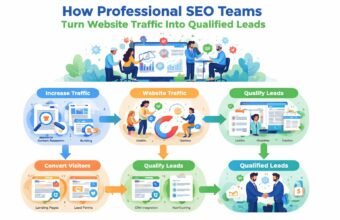
Step 7: Capture Every Website Visitor
Traffic alone doesn’t generate sales.
You need systems that convert visitors into leads.
Examples include:
- Contact forms
- Free consultation requests
- Property alerts
- Newsletter subscriptions
- Downloadable buying guides
- Home valuation requests
Keep forms short.
Only ask for essential information.
The simpler the form, the higher the conversion rate.
Step 8: Nurture Prospects Through Email Marketing
Most property buyers don’t purchase immediately.
Email keeps your business top of mind.
Create automated sequences for:
- New subscribers
- Property updates
- Investment opportunities
- Market reports
- New listings
- Educational content
Focus on providing value rather than constant sales pitches.
Step 9: Use Paid Advertising Strategically
Organic marketing takes time.
Paid advertising can accelerate growth.
Popular platforms include:
- Google Ads
- Facebook Ads
- Instagram Ads
- LinkedIn Ads (commercial properties)
- YouTube Ads
Target audiences based on:
- Location
- Interests
- Income
- Property preferences
- Search intent
Monitor campaign performance regularly and optimize for better ROI.
Step 10: Partner with Professional Lead Specialists
Many successful agencies supplement their marketing with experienced real estate lead generation services to maintain a steady pipeline of qualified prospects.
These providers often help businesses by:
- Running targeted advertising campaigns
- Creating optimized landing pages
- Managing CRM integrations
- Qualifying inquiries
- Automating follow-ups
- Improving conversion rates
Rather than replacing your in-house marketing efforts, professional lead generation services can strengthen your overall strategy by delivering consistent opportunities for your sales team.
When evaluating a provider, look for transparency in reporting, experience within the property sector, and a clear understanding of your target market.
Step 11: Leverage Social Media Consistently
Social media is more than a place to post listings.
Use it to educate and engage your audience.
Content ideas include:
- Market updates
- Behind-the-scenes videos
- Client success stories
- Neighborhood tours
- Home-buying tips
- Live Q&A sessions
- Property investment insights
Respond promptly to comments and messages to build stronger relationships with potential clients.
Step 12: Implement Marketing Automation
Automation helps you stay responsive without increasing manual workload.
Useful automation includes:
- Instant email responses
- Lead scoring
- Appointment scheduling
- SMS reminders
- CRM updates
- Follow-up sequences
Automation ensures no inquiry goes unnoticed.
Step 13: Track Performance Metrics
Successful businesses make decisions based on data.
Key metrics to monitor include:
- Website traffic
- Bounce rate
- Average session duration
- Cost per lead
- Conversion rate
- Lead source
- Appointment bookings
- Sales revenue
- Return on ad spend (ROAS)
Review your analytics monthly and adjust your marketing strategy based on what performs best.
Step 14: Build a Strong Local Brand
People often prefer working with professionals who understand their local market.
Strengthen your local presence by:
- Publishing neighborhood guides
- Sponsoring community events
- Partnering with local businesses
- Sharing local market insights
- Collecting location-specific reviews
A recognizable local brand builds credibility and encourages referrals.
Step 15: Continuously Improve the Customer Experience
Growth doesn’t stop after generating leads.
Delivering an exceptional client experience encourages repeat business and referrals.
Focus on:
- Fast response times
- Clear communication
- Honest advice
- Personalized recommendations
- Transparent pricing
- Ongoing support after closing
Satisfied clients often become your most effective marketers.
Common Mistakes to Avoid
Even experienced property professionals can limit their growth by making avoidable mistakes.
Watch out for these common issues:
- Ignoring mobile users
- Posting inconsistent content
- Failing to follow up with inquiries
- Using outdated property photos
- Neglecting SEO
- Running ads without tracking results
- Overlooking email marketing
- Focusing only on short-term campaigns
- Not investing in professional branding
- Failing to measure return on investment
Avoiding these mistakes can significantly improve your digital marketing results.
Future Trends in Online Property Marketing
As technology evolves, property businesses should prepare for emerging trends, including:
- Artificial intelligence for customer support
- Predictive analytics for buyer behavior
- Virtual reality property tours
- Voice search optimization
- Hyper-local SEO strategies
- Personalized marketing automation
- AI-powered chatbots
- Interactive property experiences
Businesses that adopt these innovations early will be better positioned to attract modern buyers.
Final Thoughts
Growing a property business online isn’t about relying on a single marketing tactic. Sustainable success comes from combining a strong website, search engine optimization, valuable content, engaging visuals, social media, email marketing, paid advertising, and data-driven decision-making into one cohesive strategy. If you’re looking for a practical lead generation for real estate guide, this framework provides the essential steps to attract qualified prospects, build lasting client relationships, and grow your business consistently.
Consistency is equally important. Building trust, improving visibility, and converting prospects into loyal clients takes time, but the results can be transformative. By following this framework, you’ll create a scalable system that attracts qualified buyers and sellers, strengthens your brand, and supports long-term business growth.
If your internal team has limited resources or you’re looking to accelerate results, partnering with experienced real estate lead generation services can help supplement your efforts with a steady flow of qualified prospects. Combined with continuous optimization and a customer-first approach, this framework provides a solid foundation for thriving in today’s competitive digital property market.





No Comment! Be the first one.