






How Professional Website Design Builds Trust
In today’s digital-first world, a business website is often the first place potential customers interact with a brand. Before making a phone call, sending an inquiry, visiting an office, or...

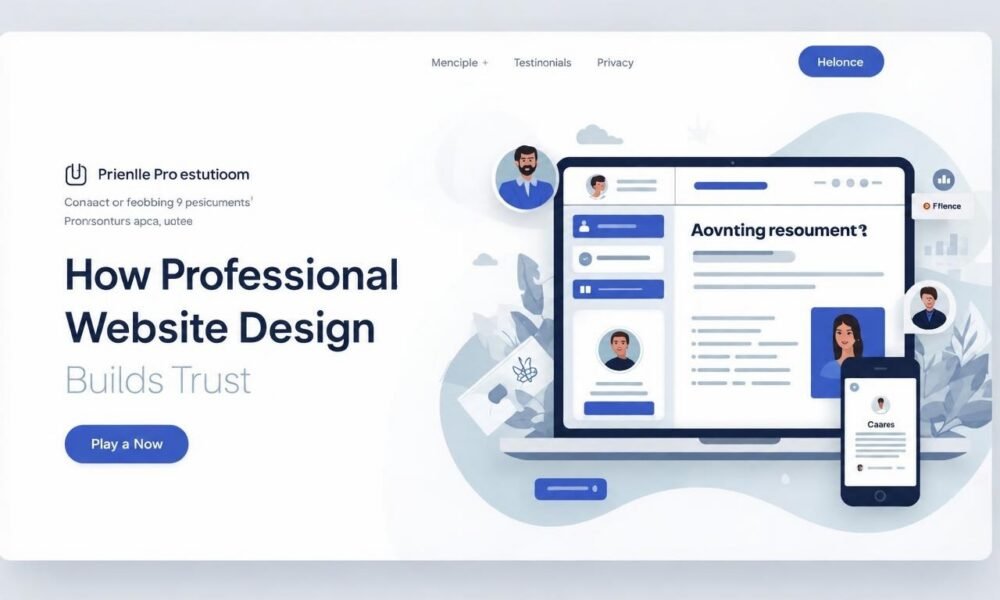
In today’s digital-first world, a business website is often the first place potential customers interact with a brand. Before making a phone call, sending an inquiry, visiting an office, or purchasing a product, people usually explore a company’s online presence to understand what it offers and whether it deserves their attention. Within just a few seconds of visiting a website, users begin forming opinions about the business behind it.
Table Of Content
- 1. First Impressions Shape Customer Perception
- 2. Consistent Branding Creates a Professional Identity
- 3. Easy Navigation Makes Visitors Feel Comfortable
- 4. Mobile-Friendly Design Shows That You Value Your Audience
- 5. Website Loading Speed Influences Trust
- 6. High-Quality Content Communicates Expertise
- 7. Genuine Testimonials and Client Reviews Build Credibility
- 8. Security Features Make Visitors Feel Safe
- 9. Clear Calls to Action Encourage Meaningful Engagement
- 10. Professional Visuals Help Communicate Quality
- 11. An Organized Website Structure Demonstrates Attention to Detail
- 12. Accessibility Shows That Your Business Cares About Everyone
- 13. Regular Updates Keep Your Business Website Trustworthy
- Why WordPress Is a Practical Choice for Building a Professional Business Website
- How to Choose the Right Website Design and Development Partner
- Conclusion
This is where professional website design becomes more than a visual consideration. It plays an important role in establishing credibility, communicating professionalism, and creating a positive first impression. A well-designed website can make visitors feel comfortable, confident, and interested in learning more about a business. On the other hand, an outdated layout, confusing navigation, slow loading speed, or inconsistent branding can create doubts before a visitor even explores the available services.
Building trust online does not happen through words alone. Every design element, from typography and color combinations to page structure and functionality, contributes to how visitors perceive a brand. A professional website communicates that a business values its customers, understands their expectations, and takes its online presence seriously.
Let’s explore how thoughtful website design helps businesses build trust before the first direct interaction with potential customers.
1. First Impressions Shape Customer Perception
First impressions matter, especially when someone visits a business website for the first time. Visitors often make quick judgments based on the website’s appearance, structure, and overall usability. If the design looks outdated or poorly organized, they may question the quality of the company’s products or services.
A professionally designed website creates an immediate sense of confidence. With reliable WordPress Website Development Services, businesses can achieve clean layouts, balanced spacing, readable fonts, attractive visuals, and consistent branding that establish a polished appearance. These elements make the website look organized, enhance user experience, and show visitors that the business pays attention to detail.
For example, imagine someone searching online for a reliable digital marketing agency. They visit two websites offering similar services. The first website has outdated graphics, inconsistent fonts, and poorly arranged content. The second features a modern layout, clear service descriptions, professional imagery, and easy navigation.
Even before contacting either company, the visitor is more likely to feel confident about the second business.
This demonstrates how website presentation can influence customer expectations. A strong first impression encourages visitors to explore further and discover what the business has to offer.
2. Consistent Branding Creates a Professional Identity
Brand consistency is another important factor in building trust. When visitors land on a website, they should immediately understand the brand’s identity and recognize its visual personality.
A professional website maintains consistency across different design elements, including:
- Brand colors and visual themes.
- Logo placement and sizing.
- Typography and heading styles.
- Image selection and graphic elements.
- Button designs and page layouts.
- Tone and messaging throughout the website.
When these elements work together, they create a recognizable brand identity.
For instance, a financial consulting company may use a clean layout, subtle colors, professional photography, and straightforward messaging to communicate reliability. A creative design agency, on the other hand, may use bold colors, expressive typography, and visually engaging layouts to demonstrate creativity.
Neither approach is necessarily better. The important thing is that the design reflects the company’s industry, values, and target audience.
Consistency also helps customers recognize a business across different digital platforms. When the website, social media profiles, and marketing materials share a similar visual identity, the brand appears more established and dependable.
3. Easy Navigation Makes Visitors Feel Comfortable
A beautiful website cannot build lasting trust if visitors struggle to find the information they need. Navigation plays a major role in creating a comfortable browsing experience.
When someone visits a website, they usually have a specific purpose. They may want to learn about a service, compare pricing, explore previous projects, or find contact information. If these details are difficult to locate, visitors may become frustrated and leave.
Professional website design focuses on creating a simple and logical navigation structure.
Some essential navigation practices include:
- Keeping the main menu clear and organized.
- Using meaningful labels for different website sections.
- Adding visible contact and inquiry options.
- Organizing services into understandable categories.
- Including internal links to relevant pages.
- Providing a search function when the website contains extensive content.
A well-structured navigation system reduces confusion and allows users to move naturally from one page to another.
It also demonstrates that the business understands its visitors’ needs. When people can find answers without unnecessary effort, they are more likely to develop a positive impression of the brand.
4. Mobile-Friendly Design Shows That You Value Your Audience
A large percentage of internet users browse websites through smartphones and tablets. This means businesses cannot rely on desktop-only layouts if they want to create a consistent experience.
A website that looks excellent on a desktop but becomes difficult to use on a smartphone can negatively affect customer perception.
Imagine a potential customer visiting your website while traveling. If the text is too small, buttons are difficult to tap, images overflow the screen, or the navigation menu does not function properly, the experience becomes frustrating.
Responsive website design solves these problems by allowing website layouts to adjust according to different screen sizes.
A mobile-friendly website should offer:
- Readable text without excessive zooming.
- Properly sized buttons and clickable elements.
- Flexible images that fit different screens.
- Simple mobile navigation.
- Consistent content across devices.
- Fast and reliable performance on mobile connections.
A responsive website communicates that a business considers the needs of all its visitors, regardless of the devices they use.
It also helps maintain brand consistency and ensures that potential customers can explore products or services whenever and wherever they want.
5. Website Loading Speed Influences Trust
Website performance is closely connected to user experience. Visitors expect websites to load quickly, and even a visually impressive design can lose its appeal if pages take too long to appear.
Slow-loading websites can create doubts about a company’s professionalism. Users may assume that the business does not maintain its digital platforms properly or may simply lose patience before the content becomes available.
Professional website development considers performance from the beginning rather than treating it as an afterthought.
Several practices can help improve website speed:
- Compressing images without sacrificing visual quality.
- Using lightweight themes and optimized code.
- Reducing unnecessary plugins and scripts.
- Implementing browser caching.
- Choosing reliable hosting infrastructure.
- Using content delivery networks where appropriate.
- Monitoring website performance regularly.
Businesses should also pay attention to Google’s Core Web Vitals, which evaluate important aspects of loading performance, interactivity, and visual stability.
A fast website makes browsing more convenient and helps visitors access information without unnecessary delays.
When users can move between pages smoothly, they are more likely to stay engaged and develop confidence in the business.
6. High-Quality Content Communicates Expertise
Design attracts attention, but content gives visitors a reason to trust a business.
A professional website should provide useful, accurate, and easy-to-understand information about the company, its services, and the problems it solves.
Visitors often arrive with questions. They want to understand what a business does, how its services work, what makes it different, and whether it can meet their requirements.
Well-written website content helps answer these questions.
Important content elements include:
- A clear homepage introduction explaining the business.
- Detailed service or product descriptions.
- An informative About Us page.
- Relevant case studies and project examples.
- Frequently asked questions.
- Helpful blogs and educational resources.
- Clear calls to action.
Avoid filling website pages with unnecessary technical language or exaggerated marketing statements. Instead, focus on explaining benefits in a way that customers can easily understand.
For example, rather than simply saying that your company offers advanced website development, explain how your solutions help businesses improve their online presence, simplify customer interactions, and support future growth.
Content should also be organized with meaningful headings, short paragraphs, bullet points, and relevant visuals.
When visitors find helpful information without having to search elsewhere, they begin viewing the business as a knowledgeable and dependable source.
7. Genuine Testimonials and Client Reviews Build Credibility
People naturally look for evidence before trusting a company they have never interacted with. They want to know whether other customers have had positive experiences.
This is why testimonials, customer reviews, and case studies are valuable additions to a business website.
A dedicated testimonial section allows businesses to showcase genuine feedback from previous clients. These experiences help potential customers understand the quality of service and the kind of results they may expect.
However, testimonials should be presented thoughtfully.
Consider including:
- The customer’s actual feedback.
- Their name or business name, with permission.
- A relevant photograph or company logo, where authorized.
- The service or project associated with the testimonial.
- A link to a detailed case study when available.
Case studies can be particularly effective because they explain how a business addressed a specific challenge.
For example, a website development agency could present a project explaining the client’s initial website problems, the improvements introduced, and the measurable results achieved.
Authenticity is essential. Businesses should never publish fabricated reviews, misleading ratings, or unverified success stories.
Genuine customer experiences provide social proof and help visitors make more informed decisions.
8. Security Features Make Visitors Feel Safe
Website security is an important part of online credibility, particularly for businesses that collect personal information, accept payments, or allow users to submit inquiries.
Visitors want to know that their information will be handled responsibly. If a website displays browser security warnings, uses outdated software, or appears suspicious, people may hesitate to interact with it.
Professional website development incorporates appropriate security measures to protect both the business and its visitors.
Some essential security practices include:
- Installing and maintaining an SSL/TLS certificate.
- Keeping the website’s core software, themes, and plugins updated.
- Using strong administrator passwords.
- Enabling two-factor authentication where possible.
- Implementing regular website backups.
- Using reputable security tools.
- Limiting unnecessary user permissions.
- Protecting contact forms against spam and abuse.
An HTTPS-enabled website encrypts information exchanged between the visitor’s browser and the website server.
For websites that accept online payments or collect sensitive customer details, additional security measures and appropriate compliance practices are necessary.
Security is not just a technical requirement. It is also an important part of the experience that helps visitors feel comfortable interacting with a business.
9. Clear Calls to Action Encourage Meaningful Engagement
A professional website should guide visitors toward useful next steps without making them feel pressured.
Calls to action (CTAs) help users understand what they can do after exploring a page. These may include requesting a quote, scheduling a consultation, downloading a resource, purchasing a product, or contacting the business.
A website without clear CTAs can leave visitors uncertain about how to proceed.
Effective calls to action should be:
- Easy to identify.
- Clearly worded.
- Relevant to the surrounding content.
- Visually distinct from other elements.
- Positioned where users naturally need them.
For example, a service-based business might use phrases such as “Request a Free Consultation,” “Explore Our Services,” or “Discuss Your Project.”
An eCommerce website may use “Shop Now,” “View Product Details,” or “Add to Cart.”
The purpose is to make the next step obvious.
It is equally important to avoid excessive pop-ups, aggressive promotional messages, and repeated interruptions. These practices can make visitors uncomfortable and reduce confidence.
A thoughtful CTA strategy respects the visitor’s decision-making process while making it easier to engage with the business.
10. Professional Visuals Help Communicate Quality
Images, videos, icons, and illustrations contribute significantly to the overall appearance of a website.
Visual content can communicate information faster than long paragraphs, making it easier for visitors to understand products, services, and brand values.
However, the quality and relevance of these visuals matter.
Using blurry photographs, unrelated stock images, inconsistent graphics, or outdated visual elements can make a website look unprofessional.
A well-designed website uses visuals strategically to support its message.
For example:
- Product photography helps customers understand what they are purchasing.
- Team photographs make a business feel more approachable.
- Project screenshots demonstrate practical experience.
- Explainer videos simplify complex services.
- Infographics present important information in an engaging format.
Businesses should prioritize original photographs and authentic project visuals whenever possible.
If stock photography is necessary, choose images that genuinely match the brand’s message and audience.
Visual consistency also matters. Images should complement the website’s color palette, typography, and overall design style.
When visuals are selected carefully, they help create a more memorable and credible online experience.
11. An Organized Website Structure Demonstrates Attention to Detail
A website’s structure affects how visitors understand the business and interact with its information.
When pages are arranged logically, users can easily identify important sections and understand the relationship between different services or topics.
For example, a professional service provider may organize its website into the following sections:
- Home
- About Us
- Services
- Portfolio
- Testimonials
- Blog
- Contact Us
Each section should have a clear purpose and provide relevant information.
A logical structure also makes it easier for search engines to discover and understand website content.
From descriptive URLs and proper heading hierarchies to internal linking and structured data, thoughtful website architecture supports both usability and search engine optimization.
Businesses should avoid creating unnecessary pages or placing unrelated information together simply to increase website size.
Instead, every page should serve a specific audience need.
An organized website reflects a structured approach to business operations and makes it easier for potential customers to find the information they need.
12. Accessibility Shows That Your Business Cares About Everyone
Trust is also built when a website makes visitors feel included and respected.
Website accessibility ensures that people with different abilities can navigate and interact with digital content more effectively.
For example, visitors who use screen readers need meaningful image descriptions and properly structured content. People with visual impairments may require sufficient color contrast and scalable text. Users with mobility limitations may depend on keyboard navigation.
Professional website design should consider accessibility throughout the development process.
Important accessibility practices include:
- Adding descriptive alternative text to meaningful images.
- Maintaining sufficient color contrast.
- Using clear and descriptive link text.
- Supporting keyboard navigation.
- Providing labels for form fields.
- Organizing content with proper heading structures.
- Including captions for relevant video content.
- Avoiding design elements that create unnecessary distractions.
Following recognized accessibility guidance, such as the Web Content Accessibility Guidelines (WCAG), can help businesses create more inclusive digital experiences.
An accessible website benefits a wider audience and demonstrates that the business values usability rather than focusing exclusively on appearance.
13. Regular Updates Keep Your Business Website Trustworthy
Launching a professional website is only the beginning. Maintaining it regularly is equally important for preserving credibility.
Visitors may notice outdated service information, broken links, old promotional banners, expired offers, or blog posts that have not been updated for years.
These details can create the impression that a business is no longer active or does not pay attention to its online presence.
Regular website maintenance helps prevent these issues.
Businesses should periodically review:
- Service descriptions and pricing information.
- Contact details and business hours.
- Website links and navigation menus.
- Customer testimonials and portfolio projects.
- Software updates and security settings.
- Mobile responsiveness and loading performance.
- Blog content and outdated information.
A regularly maintained website reflects an active and responsible business.
It also helps prevent technical problems that could affect customer experience or expose the website to security risks.
A professional website should evolve alongside the business, its services, and customer expectations.
Why WordPress Is a Practical Choice for Building a Professional Business Website
Choosing the right platform is another important decision when creating a website that inspires confidence.
WordPress is a popular content management system that gives businesses flexibility in designing, managing, and expanding their online presence.
Its extensive ecosystem of themes, plugins, and customization options makes it suitable for various website requirements, including corporate websites, portfolios, blogs, service-based platforms, and online stores.
Some advantages of using WordPress include:
1. Flexible customization: Businesses can create website layouts and features that reflect their unique branding and functional requirements.
2. Content management: Website owners can publish blogs, update service pages, and manage website content without depending on developers for every small change.
3. SEO-friendly structure: WordPress supports several practices that help improve website visibility, including customizable URLs, structured content, and SEO plugin integrations.
4. Scalability: Businesses can introduce additional features as their requirements grow, such as booking systems, payment gateways, membership areas, and eCommerce functionality.
5. Extensive integrations: WordPress can connect with various third-party tools, marketing platforms, analytics services, and business applications.
However, the platform alone does not guarantee a professional website. The quality of design, development, hosting, security, and ongoing maintenance determines the overall experience.
Working with experienced developers can help businesses build a website that combines attractive visuals with reliable functionality.
How to Choose the Right Website Design and Development Partner
Creating a trustworthy website requires more than installing a theme and adding a few pages. It involves understanding business objectives, researching the target audience, planning the website structure, and developing features that support customer needs.
Choosing the right development partner can make this process easier.
Before hiring a website design and development company, consider the following factors:
Review their portfolio: Explore previous projects to understand their design quality, technical capabilities, and experience across different industries.
Evaluate customization capabilities: Make sure the team can develop solutions according to your business requirements rather than relying entirely on pre-designed templates.
Discuss website performance: Ask how they approach loading speed, responsive design, and technical optimization.
Understand their development process: A reliable team should be able to explain the planning, design, development, testing, and launch stages.
Check communication and support: Clear communication and dependable post-launch support are important for long-term website management.
Discuss security and maintenance: Understand how updates, backups, troubleshooting, and security improvements will be handled.
A good development partner focuses on building a website that supports your business goals rather than simply delivering an attractive design.
Conclusion
Professional website design plays a significant role in shaping how people perceive a business before they ever make direct contact. From the first visual impression to navigation, mobile responsiveness, content quality, security, and accessibility, every element contributes to the visitor’s overall experience.
A well-designed website communicates professionalism, demonstrates attention to detail, and makes it easier for potential customers to explore a company’s offerings with confidence. It also helps establish a consistent brand identity and creates a reliable digital environment where visitors can find information and take meaningful action.
For businesses looking to strengthen their online presence, investing in a professionally developed website is a valuable long-term decision. Platforms like WordPress offer the flexibility and functionality needed to create customized digital experiences that can grow alongside changing business requirements.
Ultimately, a website should do more than look attractive. It should communicate credibility, answer customer questions, provide a smooth browsing experience, and encourage visitors to take the next step.
Remember, trust often begins before a conversation takes place. Your website is an opportunity to make that first impression count.



No Comment! Be the first one.