






How Commercial Solar Power Plants Work?
Have you ever looked at the roof of a large factory or a big office building and seen hundreds of shiny blue or black panels? Those aren’t just for show. They are part of a system that is...

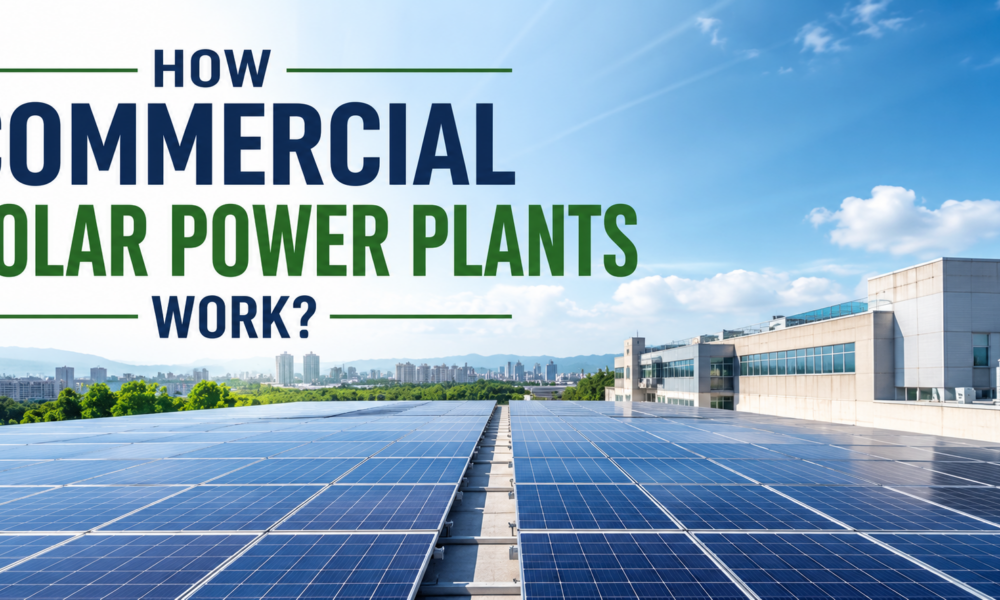
Have you ever looked at the roof of a large factory or a big office building and seen hundreds of shiny blue or black panels? Those aren’t just for show. They are part of a system that is changing how businesses run. Many companies are now looking at ways to save money and help the planet at the same time. Installing Commercial Solar Power Plants is one of the smartest ways to do this. Instead of just paying a high electricity bill every month, a business can use the sun to make its own power.
Table Of Content
- What Is a Commercial Solar Power Plant?
- Main Components of a Commercial Solar Power Plant
- Solar Panels
- Solar Inverter
- Mounting Structure
- Electrical Wiring & Protection System
- Net Meter
- Monitoring System
- Step-by-Step: How a Commercial Solar Power Plant Works
- Step 1: Solar Panels Absorb Sunlight
- Step 2: DC Electricity Is Generated
- Step 3: Inverter Converts DC to AC
- Step 4: Electricity Powers Business Operations
- Step 5: Extra Electricity Is Exported to the Grid
- Step 6: Electricity Is Used from the Grid When Needed
- Benefits of a Commercial Solar Power Plant
- Why Choose Raynex Power Solution for Commercial Solar?
- Contact Raynex Power Solution
- Conclusion
- Frequently Asked Questions
- How does a commercial solar power plant generate electricity?
- How much electricity can a commercial solar plant produce?
- Do commercial solar power plants work on cloudy days?
- What is the lifespan of a commercial solar power plant?
- Is net metering available for commercial solar systems?
- How long does it take to recover the investment in a commercial solar power plant?
In this guide, we will explain exactly how commercial solar power plant work in simple words. You don’t need to be an engineer to understand it. We will look at the parts that make up the system and follow the path of a sunbeam from the sky into your office lights. By the end, you will see why a commercial solar use is such a great investment for the future.
What Is a Commercial Solar Power Plant?
A commercial solar power plant is a large-scale system designed to provide electricity to businesses, factories, or large offices. Unlike the small systems you might see on a house, these are built to handle a much bigger load. They are often installed on the flat roofs of warehouses or in large open spaces near a factory. The main goal of Commercial Solar Power Plants is to reduce the amount of energy a company has to buy from the local power company.
These plants are built to last for a long time and produce a lot of energy. When a company decides to build a commercial solar power plant in india, they are looking for a reliable way to get energy. These systems are tough, efficient, and can handle the high energy needs of heavy machinery and large cooling systems. It is essentially a private power station owned by the business.
Main Components of a Commercial Solar Power Plant
To understand how the whole thing works, we first need to look at the parts. Every piece has a special job to do. If one part is missing, the system won’t work correctly.
Solar Panels
Solar panels are the most visible part of the system. They are made of many small solar cells. These cells are usually made of silicon. When sunlight hits these cells, it creates an electrical reaction. In Commercial Solar Power Plants, hundreds or even thousands of these panels are linked together to catch as much sunlight as possible. High-quality panels can last for over 25 years with very little trouble.
Solar Inverter
Think of the inverter as the “brain” of the system. The electricity made by the panels is called DC (Direct Current). However, most buildings and machines use AC (Alternating Current). The inverter takes the DC power and changes it into AC power so your computers, lights, and machines can use it. Without a good inverter, the energy from the sun would be useless to your business.
Mounting Structure
The mounting structure is the metal framework that holds the panels in place. It has to be very strong. It must keep the panels at the perfect angle to catch the most sun throughout the day. It also needs to withstand strong winds and heavy rain. A solid mounting system ensures that your investment stays safe and secure on your roof for decades.
Electrical Wiring & Protection System
You need high-quality cables to move the electricity from the panels to the inverter and then into the building. The protection system includes fuses and circuit breakers. This is very important for safety. If there is a sudden surge in electricity, these safety tools shut things down to prevent fires or damage to your expensive business equipment.
Net Meter
This is a special type of meter that tracks how much electricity you are making versus how much you are using. This process is called net metering. When your solar plant makes more power than you need, the extra goes back to the local power grid. The meter spins backward, and you get credit for that energy. This is a huge help in lowering your final bill.
Monitoring System
Most modern Commercial Solar Power Plants come with an app or a computer program. This allows the business owner to see exactly how much power the system is making in real-time. If there is a problem, the system sends an alert. It helps you keep track of your savings and ensures the plant is always working at its best.
Step-by-Step: How a Commercial Solar Power Plant Works
Now that we know the parts, let’s look at the step-by-step process of how power is made.
Step 1: Solar Panels Absorb Sunlight
Everything starts with the sun. As soon as the sun rises, the solar panels begin to work. The solar cells inside the panels capture the energy from the sunlight. It is important to know that they don’t need a hot day to work; they just need light. Even on a cool day, as long as there is light, they are making energy.
Step 2: DC Electricity Is Generated
When the light hits the panels, it knocks electrons loose. This creates a flow of electricity called Direct Current (DC). This power flows through the wires toward the inverter. At this stage, the electricity is already powerful, but it is not yet in the right form for your office gadgets.
Step 3: Inverter Converts DC to AC
The DC electricity enters the solar inverter. The inverter quickly switches it into AC electricity. This happens instantly. Modern inverters are very efficient, meaning they don’t waste much energy during this change. This AC power is now ready to flow into the building’s main electrical panel.
Step 4: Electricity Powers Business Operations
The AC power flows into your building. It automatically goes to whatever needs it first—your lights, air conditioners, and machines. Because this power comes directly from your roof, you aren’t buying it from the utility company. This is how you start saving money immediately.
Step 5: Extra Electricity Is Exported to the Grid
Sometimes, especially on a sunny weekend when the office is closed, your solar plant will make more power than you can use. Instead of wasting it, the system sends it out to the city’s power grid. Your net meter records this, and the power company gives you credits. This lowers your bill even more during the times when the sun isn’t shining.
Step 6: Electricity Is Used from the Grid When Needed
At night or on very dark, rainy days, your solar panels might not make enough power. When this happens, your building automatically pulls power from the grid like it always did. You won’t notice any flickering or changes. The system manages the switch between solar power and grid power perfectly.
Benefits of a Commercial Solar Power Plant
Why are so many businesses making the switch? Here are the top reasons:
- Lower electricity bills: You can slash your monthly costs by a huge amount by making your own energy.
- Fast return on investment (ROI): While the solar project cost might seem high at first, the savings pay for the system in just a few years.
- Low maintenance requirements: Solar plants have no moving parts, so they don’t break down often. A simple cleaning is usually all they need.
- Reduced carbon emissions: Using solar energy helps the planet. It reduces the amount of pollution your business creates, which is great for the environment.
- Long system lifespan: Most high-quality Commercial Solar Power Plants are built to last for 25 years or more. It is a long-term solution for your energy needs.
- Energy independence: You become less dependent on the local power grid. You don’t have to worry as much about rising energy prices in the future.
- Improved business sustainability: Many customers prefer to buy from green businesses. Showing that you use solar energy can improve your brand’s image.
Why Choose Raynex Power Solution for Commercial Solar?
When you decide to go solar, you need a partner you can trust. Raynex Power Solution is an expert in building a commercial solar power plant in india. We understand the local weather and the specific needs of businesses in this region. We use high-quality materials and provide expert installation to ensure your system works perfectly from day one.
We don’t just install panels; we help you plan the best system for your specific budget and roof space. Our team handles everything from the initial design to setting up the connection with the local grid. With our help, you can start saving money and helping the earth without any stress. We focus on making the transition to solar energy simple and profitable for you.
Contact Raynex Power Solution
Address:
806, Sarthana Business Hub, Sarthana-Jakatnaka, Surat , Gujarat – 395006.
Phone:
+91 87586 12077
Conclusion
A commercial solar power plant in india is one of the best investments a business can make today. It turns an empty roof into a source of income. By understanding how the panels, inverters, and meters work together, you can see that solar is a reliable and smart technology. It protects your business from high costs and shows your customers that you care about the future.
If you are ready to lower your bills and gain energy independence, now is the time to act. Solar technology is better and more affordable than ever before. Contact a professional team like Raynex Power Solution to find out how a solar power plant for commercial use can transform your business for the better.
Frequently Asked Questions
How does a commercial solar power plant generate electricity?
A commercial solar power plant generates electricity by using solar panels to capture sunlight. These panels contain silicon cells that turn light into Direct Current (DC) electricity. An inverter then changes this DC electricity into Alternating Current (AC), which can power business machines and lights.
How much electricity can a commercial solar plant produce?
The amount of electricity produced depends on the number of panels and the size of the installation area. A typical commercial system can produce anywhere from 10 kilowatts to several megawatts. A professional installer can help calculate the exact production based on your available roof space and sunlight levels.
Do commercial solar power plants work on cloudy days?
Yes, commercial solar power plants still work on cloudy days. While they produce the most electricity in direct sunlight, they can still capture diffused light through the clouds. The production will be lower than on a sunny day, but the system will still generate power.
What is the lifespan of a commercial solar power plant?
Most commercial solar power plants are designed to last for 25 to 30 years. The solar panels usually come with a performance warranty that ensures they will still produce a high percentage of their original power even after two decades.
Is net metering available for commercial solar systems?
Yes, net metering is available for many commercial solar systems. This allows businesses to send any extra electricity they produce back to the public power grid in exchange for credits on their utility bill, which helps reduce costs even more.
How long does it take to recover the investment in a commercial solar power plant?
In many cases, businesses can recover their initial investment in 3 to 5 years through electricity bill savings and tax benefits. Since the system lasts for over 25 years, the business enjoys free electricity for a very long time after the initial cost is paid back.
Want to learn more about types of solar encapsulant, so read this article:





No Comment! Be the first one.